
Nitrous Oxide's main clinical effect is to lessen anxiety. It works really well and is very safe. Its effects are somewhat mild and, in some patients, additional medications may be needed to relieve anxiety or achieve a more cooperative patient. You can't rely on laughing gas alone to eliminate painful sensations, you still need to use local anesthetics for more invasive procedures, but in some cases Nitrous alone will be enough to eliminate the need for local anesthesia. Its effects are generally described as analgesia.
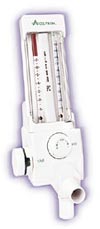
Is Laughing Gas Safe? Yes, when administered to patients correctly. It is always administered with oxygen. In fact "flowmeters" have a fail-safe mechanism that will deliver no less than 35-40% oxygen. That's almost twice the oxygen concentration in room air (which is 21% O2). I personally don't like to use it higher that 50% Nitrous/50% Oxygen. The only complication I sometimes see is a child who has been on it a really long time and gets a little sick to his stomach. Sort of like riding the merry-go-round one too many times.
Do patient's really laugh? Well, usually not. Usually they just feel good and "zone out' a little although they are still responsive and will cary on a conversation with you. Some kids really do get the giggles. When they do, it's hard for them to stop. That gets us giggling too and it's really funny!
By the way, it's also used in race cars to boost engine output.
Addendum 8/25/2018:
There are obscure reports of Lechtheims disease (a neurological disorder associated with underlying Vitamin B-12 deficiency) occurring after recreational exposure to Nitrous Oxide, as in inhaling balloons filled with N20. This is extremely rare. I have seen no reports in the dental setting. Cases appear to be associated with recreational use (which is 100% concentration- that's in itself risky due to 0% oxygen) and general anesthesia administration where the % can be higher than the dental office setting and for a longer duration. Lesson: don't use Nitrous Oxide recreationally.






 Posts
Posts


39 comments:
thank you for this posting.
Thanks for this. When the dentist told my husband that my daughter should use it for her cavities, (she's 5), he failed to ask what the side effects are, and how does she come out of it. This takes a little anxiety out of it for me.
wooow, that's nice!
Thank you so much for posting this. I was told my 6 year old needs this to have a tooth pulled d/t over crowding in his mouth. I was a little nervous. This was very helpful!
my 7 year old is having laughing gas for a tooth being pulled out. i am really worried bout it will she feel the paib of toothbeing pulled
My daughter is four and had the liquid medicine and the gas and the combination did not work ... This was preformed by a pediatric dentist who was certified in conscious sedation and they couldn't even get the work started she was so upset and probably scared to death to ever go back not to mention when we got home she was sick to her stomach from the medicine and not eating or drinking she threw up .. not a good experience at all
Medications can be unpredictable especially on younger children. Read more on oral sedation on other posts o the blog here under sedation and behavior management. Sometimes general anesthesia is required to accomplish the work.
I have a 2yr 10 moths old Daughter and was diagnosed with four tiny cavities on her back molars and one tiny cavity in between her front two teeth and at our first dentist they told me I couldn't go back there. Which was not ok with me and a month later I found a pediatric dentist who would let me in but didn't offer any kind of sedation except the shots and used papoose board which I didn't really like but I would be allowed to see how it went. She let them put her in the papoose since I told her it was so she wouldn't be cold and once they four the four shots she cried but once the drilling started she couldn't stop screaming not crying but screamed. I asked if the anestesia had kicked in since they didn't give her a few minutes. They started right away.. I felt so bad for taking her.. Although it lasted like about 30 minutes. And like I said whith the shots she cried but didn't move and once the drilling started she kicked and kicked as if she was being tortures but I didn't say to stop since they had drilled all four and ha to only fill them. I couldn't take her home with them unfilled.. She also gaged and cried hard twice and they didn't turn her face or got her up just suctioned her mouth which seem to get too close to her thoat and would scram with that too:-( so I haven't fixed the one in the front teeth since they said she would need 2 shots one on each tooth and get caps since she can't have them filled since the cavity is too close to the gum and could not stay in place..
Part 2 daisy Garcia
I want to try a different dentist who will let me in and use some kind of sedation . Even tough I haven't seen any change in her behavior at home I did take her to a different dentist to check the front teeth and she would not allow him to even touch her which wasn't a problem before the four fillings.. I should have just sedated her somewhere else for those procedures:-( will the laughing has and drink work for her? Can they administer the laughing gas while she is on my lap and once she has breathed it for like a minute put her in the pappose? That would help us both:) thanks in advance:)
Sorry for my short delay in posting your comments, we have been busy this week. Please read more on behavior management (over there on the right side--->). You will see is very common and normal for a two year old patient to cry or be very resistant even for just an examination. They are in the "pre cooperative" stage. As they get older, things get much better. If they are resistant like that, then no matter what you do they will cry and fight. You can softly put in a cotton ball on their cheek and they will scream. So, what can you do? Often they need to be asleep, that is general anesthesia. Sedative drugs might work but they are unpredictable (read also my posts on sedation). Laughing gas is great for older children and teens who are just a little anxious but generally cooperative. It can also be used during sedation or as an adjunct to other things. Most pediatric dentists can pick which method might work the best, but some kids you never know till you try. Then if that does not work, you can change the plan to something that is more effective like general anesthesia.
In office sedation can work, but any sedation or anesthesia is not to be taken lightly and is only done if really needed and under controlled conditions. Two year olds often do not respond adequately to the levels of medication used in an office setting. So, good luck and please read more here on the blog.
I'm an adult who a few years ago had my wisdom teeth removed. At the procedure, the anesthesiologist gave me nitrous oxide to prep me for an IV, which I told them I didn't need, since I was used to IVs but never had a gas mixture before. They insisted, so I tried it. Within minutes, my face started going numb, and I, not knowing the side effects (since I didn't know I was going to have it used before I arrived for the surgery) ended up having a panic attack with accelerated heart rate, hyperventilation, and crying. At first the doctors and nurses thought that I was upset due to the nurse missing my arm vein, but I told them it was the gas. They agreed to reduce the level of Nitrous Oxide, but insisted on still giving me air, just with a reduced N20 level. Once the numbness wore off, I was able to calm, and they were able to eventually get the IV in me without more behavioral mishap. After that, I don't remember anything till I woke up after the extraction. What I was wondering, have you had patients react poorly to the sensations that Nitrous oxides gives, or is my panic attack rare? I think, perhaps, I just have a phobia of breathing in anything but regular air, although helium play with old balloons doesn't bother me.
What do you think?
Nitrous oxide is an inert gas. Reactions like that sound much more like anxiety, panic attack if you will. The feeling if being a little but dizzy or disoriented can make (usually older patients ) feel a little to weird. Other than that I have never seem that.
My 6 y/o grandson just got back from the dentist for a baby tooth extraction, and 3 fillings. They used nitrous on him. He went utterly ballistic-totally freaked out, and was a hysterical screaming mess by the time it was over, and collapsed when they brought him out. I think he would have been better off without it. I think the weird feeling is what freaked him out. He also remembers everything, and one of his front baby teeth was knocked out in the process, which he said he felt in his mouth until it got suctioned out. He also felt his tooth being taken out and said it hurt really bad.(It did have a long root on it) I would hesitate to have anything else done if his mother is not allowed in the room with him. I am not even sure they used novocaine in his extraction. He is now terrified of dentists. I understand how some parents can make things worse, but now I think I would insist someone be there to watch out for the child.
I refuse to have my 2 yr old strapped down again and won't let them put her to sleep she needs another filling but screams kicks cries the whole time. Is there any other options?
My 2 yr old needs another filling, I refuse to have her strapped down again and will not have her put to sleep. She screams cries kicks the whole time are there any other options? The dentist said laughing gas will do no good if she cries and screams while inhaling it
Anon---Options are always limited with 2 year old children with treatment needs. Read my posts on behavior and sedation. Sometimes sedative medications help a young child relax enough. Laughing gas alone is often not enough with young children. If you do not want general anesthesia, you may want to discuss in office conscious sedation with your pediatric dentist. We (as dentists) can often tell if medications will "work" or if there is a lot of uncertainty with the anticipated effects. Of course, people can always wait and not do or postpone treatment--this can have consequences as well.
My 7 year old has a cavity in his back upper molar on his left side. His dentist office said that they used laughing gas. I had an okay experience with it when I was put on it at 12 years old. He has never been to the dentist before and is a little nervous. What can I do to help him? I am concerned about the nausea part. I have a fear of that. How soon after the procedure will he be back to himself? How long after the procedure can he eat?
As you can read here, the effects wear off in a couple minutes for kids. --A little longer for adults. Nausea is a rare event.
I was 10 yrs old and had a tooth pulled. The sweet air was so strong, I couldn't see. I started to panic and call out for my Dad. Sounds were really echo-y. It took a rweal long time to wear off. What happened?
My 6 year old had a tooth out last week and he had gas and air but the dentist won't take his other one out this week With gas and air cuz he had it last week anyone know y?? Many thanks
I don't know a reason unless he wants the extraction site to heal. Nothing I know of with the nitrous oxide.
i am going to get a tooth pulled friday april 1st and will use laughing gas and my mother wants to send me back to school afterwords can she do that concidering the pain and effects?
My 8yo has gas while getting fillings. Afterwards he literally could not keep his eyes open and slept for most f the day. His dentist stated there is no way it was due to the gas. I suspect otherwise as he was fine, alert and orientated prior to having gas. Is this a possible reaction to the gas, and if so should he ever have it again? He does take ADHD medication - the dentist knew about. Could this cause an interaction?
There is no lasting effect of nitrous oxide after about 30 minutes. It is an inert gas. Other things can cause sleepiness in a child, including nervousness and stress of a new experience like dental work. No data or studies to show any long term effect of nitrous oxide.
My 5 yr old daughter is having a Cap on monday using Nitrous Oxide should i be worried? Just one tooth.
Can the gas have any side effects? My son is complaining of his chest hurting and he has asthma?
Any effects are during the actual administration, not afterwards (more than like 30 minutes afterwards). Asthma is a consideration, but if well managed, is usually never a problem--at least in my experience.
Hi Dr Brandon,
Thanks so much for all your posts. My daughter is 12 and scheduled this Tuesday for 3 baby/4 permanent teeth removed due to over-crowding. The Oral surgeon is giving us the choice for versed and conscious sedation or just going with the Nitrous and local. I am mixed because of concerns over possible complications with versed (although rare) and wonder if she is old enough to tolerate without or is having adult teeth removed too severe?
Thanks for your help!
Hi Dr Brandon, I'm not sure if my original question came through but was asking about use of versed or not for 12 year old having 7 teeth pulled (3 baby and 4 permanent) due to over-crowding. She had 5 baby pulled a few years ago with just nitrous and local and did great but is the adult extractions so much more severe? I would rather avoid the oral sedation if possible due to my concerns with possible complications, although rare.
All I can say is that we use Versed frequently for situations like that. Each child is different and you should discuss with the dentist doing the treatment., Versed is a great medication for anxiety etc. Read up more on sedation here on the blog.
Is it normal for my childs lip to be droopy and swelling after he had a cap put in and if so how long will this be like this.He had it done at 930am this morning and it still is like this.It looks like he has a huge bump on the enter part of his lip near his jaw but it is his actual jaw..He had the laughing gas as well...Any ideas and should i worry???
Droopy lip sounds more like numbness from anesthetic or sometimes a child bites their lip while it is numb causing swelling. See your dentist to confirm,
Hi,My four and a half year old has eight cavities. The dentist wants to give her versed and restraints for two sessions.I don't feel comfortable with either. Do you think she would be okay with nitrous instead? I don't want her to be traumatized though. She needs two shots and two possible baby root canals
Laughing gas is great, but it’s effects are fairly mild. I’d ask your pediatric dentist about options. Read more here on the blog about sedation, etc.
For a 3 year old anxious patient having two cavities filled, is Nitrous oxide better to use or Versed?
I cannot really say which is "safer" as there are too many variables. However, Nitrous oxide, as administered by failsafe dental flowmeters, would generally be seen as "safer" than sedative medications, even Versed. The two can work well together effectively and safely in the right hands.
My daughter just had laughing gas today she is six and wene thay were pulling her tooth out she was crying I asked if she was in pain thay said no it was just the presser she felt
So my son had dental work done he is 6 years old he just had a cavity filled on his upper left molar they use laughing gas and numb to him now here it is almost 12 hours later and my son's face and still drooping and his cheek is swollen is that normal
It's always ok to follow up with your dentist regarding any unusual occurrences. Often children bite their numb cheek or lip after dental work causing swelling, however, numbness after 12 hours is unusual.
Post a Comment